Top 10 Benefits of Tranexamic Acid Powder for Skin and Health
In recent years, Tranexamic Acid Powder has emerged as a groundbreaking ingredient in the fields of dermatology and health. Renowned for its ability to effectively reduce skin discoloration and improve overall skin tone, Tranexamic Acid Powder has garnered attention among dermatologists and skincare professionals alike. According to a report by the American Academy of Dermatology, the prevalence of hyperpigmentation disorders, such as melasma, has increased significantly, affecting nearly 5 million individuals in the United States alone. This has led to a growing demand for effective treatment options, positioning Tranexamic Acid Powder as a key player.
Dr. Emily Chen, a leading expert in dermatological treatments, states, “Tranexamic Acid Powder has transformed the way we approach skin pigmentation issues, providing a non-invasive and effective solution for patients.” With its potent anti-inflammatory properties and ability to inhibit melanin production, this ingredient not only helps in managing skin conditions but also contributes to overall health by promoting a more radiant complexion. As the beauty and wellness industries continue to evolve, the significance of Tranexamic Acid Powder is undeniable, paving the way for innovative skincare therapies that prioritize efficacy and safety.

Understanding Tranexamic Acid: An Overview of Its Uses
Tranexamic acid, originally developed as a hemostatic agent to reduce bleeding in surgical settings, has gained significant attention in dermatology for its multifaceted benefits for skin health. This synthetic derivative of the amino acid lysine works by inhibiting the activation of plasminogen to plasmin, thus reducing fibrinolysis and preventing excessive bleeding. However, its utility extends far beyond this primary function.
Recent studies indicate that tranexamic acid can effectively reduce melasma and hyperpigmentation, conditions that affect a significant percentage of the population, particularly women.
Research published in dermatological journals has shown that topical application of tranexamic acid can lead to noticeable improvements in skin tone and texture, with studies reporting up to a 50% reduction in hyperpigmented lesions within a 12-week regimen.
In addition to its topical application, tranexamic acid is not only beneficial for cosmetic purposes but also plays a role in overall skin health by enhancing the skin's barrier function. Frost & Sullivan's 2022 report on skin care trends highlighted the increasing consumer demand for ingredients that provide both immediate and long-term skin improvements, emphasizing the importance of active compounds like tranexamic acid.
Moreover, it has shown promise in reducing inflammatory responses, making it a valuable option for individuals with sensitive or acne-prone skin.
The dual functionality of tranexamic acid positions it as a versatile ingredient in skincare formulations, appealing to a broad audience seeking effective solutions for common skin issues.
The Role of Tranexamic Acid in Treating Skin Discoloration
Tranexamic acid, originally used to treat heavy bleeding, has gained popularity in dermatology for its remarkable ability to address skin discoloration. This amino acid works by inhibiting the production of melanin, thereby helping to reduce hyperpigmentation, melasma, and post-inflammatory marks. Its efficacy in lightening dark spots and evening skin tone makes it a valuable addition to any skincare routine focused on achieving a brighter complexion.
Incorporating tranexamic acid powder into your skincare regimen can offer stunning results. However, it’s essential to use it correctly to maximize its benefits. Start by mixing a small amount of the powder into your favorite serum or moisturizer, applying it once daily. Always conduct a patch test before full application to check for any adverse reactions. Additionally, using sunscreen is crucial, as tranexamic acid can make the skin more sensitive to the sun, helping prevent further discoloration.
Another tip for enhanced results is to combine tranexamic acid with other skin-brightening ingredients, such as vitamin C and niacinamide. This synergistic approach can create a powerful treatment against uneven skin tone. Always remember to consult with a dermatologist if you have any concerns about your skin type or specific conditions.
Benefits of Tranexamic Acid for Skin Hydration and Repair
Tranexamic acid powder has gained significant attention in the skincare community due to its remarkable benefits for skin hydration and repair. One of its primary advantages is its ability to enhance the skin's moisture levels. By promoting hydration, tranexamic acid helps maintain a plump and youthful appearance, effectively reducing dryness and flakiness. This is particularly beneficial for individuals with sensitive or dehydrated skin, as it provides a soothing effect, minimizing irritation and enhancing overall skin texture.
In addition to improving moisture retention, tranexamic acid plays a crucial role in skin repair. It aids in reducing hyperpigmentation and dark spots, making the complexion more even and radiant. This compound functions by inhibiting melanin production, which can help fade discoloration over time. Moreover, its anti-inflammatory properties contribute to calming redness and irritation, further supporting the skin's recovery process. By incorporating tranexamic acid into a skincare regimen, individuals can experience a revitalized and healthier complexion, making it an essential ingredient for holistic skin care.
Exploring the Health Benefits of Tranexamic Acid Beyond Dermatology
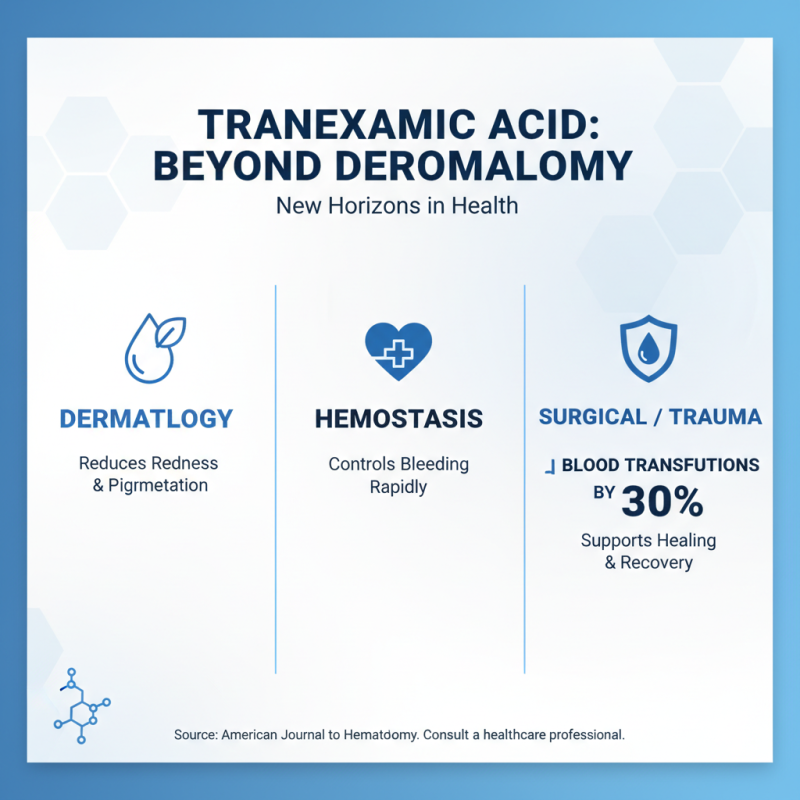
Tranexamic acid, commonly recognized for its role in dermatology, has garnered attention recently for its broader health benefits. This synthetic derivative of the amino acid lysine is traditionally used to reduce excessive bleeding, making it a vital component in various medical treatments. According to a study published in the *American Journal of Hematology*, tranexamic acid has been shown to decrease the need for blood transfusions during surgical procedures by up to 30%, highlighting its potential in surgical and trauma settings.
Beyond its hematological applications, tranexamic acid has also demonstrated promising results in managing conditions such as heavy menstrual bleeding (HMB). Research in the journal *Obstetrics & Gynecology* indicates that tranexamic acid significantly lowers menstrual blood loss, improving quality of life for those affected. Additionally, its anti-inflammatory properties can play a crucial role in conditions like melasma, exhibiting efficacy in reducing skin pigmentation while also potentially addressing underlying systemic issues.
Furthermore, ongoing research explores the potential cognitive benefits of tranexamic acid. A study published in *Clinical Neurology and Neurosurgery* suggests that the drug may have applications in certain neurological conditions. While further investigation is needed, these findings point to a multifaceted role of tranexamic acid, underscoring its importance not only in dermatology but also in diverse medical fields, thereby enhancing both skin health and overall well-being.
Safety and Side Effects of Tranexamic Acid Powder in Skin Care
When considering the use of tranexamic acid powder for skincare, understanding its safety and potential side effects is essential. Tranexamic acid is frequently used in various dermatological treatments due to its ability to reduce hyperpigmentation and improve skin tone. However, while it is generally considered safe for topical use, some individuals may experience mild side effects. These can include skin irritation, redness, or a burning sensation upon application. It is advisable for users to conduct a patch test prior to applying the product extensively to mitigate any adverse reactions.
Additionally, the safety profile of tranexamic acid is generally favorable, but certain precautions should be taken. People with pre-existing skin conditions, such as eczema or rosacea, should consult with a dermatologist before incorporating tranexamic acid into their routine. While it is a well-tolerated ingredient for many, understanding one’s skin type and its unique sensitivities is crucial. Maintaining awareness of these factors helps to enhance the benefits of tranexamic acid while minimizing potential side effects, enabling users to harness its advantages for healthier, more radiant skin.
Top 10 Benefits of Tranexamic Acid Powder for Skin and Health - Safety and Side Effects
| Benefit/Aspect |
Description |
Safety |
Side Effects |
| Reduces Hyperpigmentation |
Helps to lighten dark spots and improve skin tone. |
Generally safe for topical use; consult a dermatologist. |
Mild skin irritation or redness. |
| Anti-inflammatory Properties |
Reduces redness and swelling in skin conditions. |
Safe for most skin types. |
Rare allergic reactions. |
| Improves Skin Hydration |
Enhances moisture retention in the skin. |
Considered safe. |
None reported. |
| Reduces Post-inflammatory Hyperpigmentation |
Helps fade spots left by acne or injury. |
Safe for use on all skin types. |
Potential for mild irritation. |
| Cicatricial Conditions Treatment |
Effective in treating certain scarring conditions. |
Monitor for any adverse effects. |
Bruising at injection site if administered. |
| Used in Acne Treatment |
Aids in reducing acne-related pigmentation. |
Generally safe; consult a professional. |
Possible skin dryness. |
| Decreases Melasma |
Effective in treating melasma in some patients. |
Safe for use with assessment. |
Transient skin irritation. |
| Minimal Side Effects |
Generally well-tolerated treatment option. |
Safe with proper use. |
Uncommon allergic reactions. |
| Skin Brightening |
Gives a brighter, more radiant complexion. |
Low risk when used appropriately. |
Rare instances of sensitivity. |
| Improves Overall Skin Texture |
Enhances smoothness and softness of skin. |
Generally safe for daily use. |
Very few side effects. |

 Food Additives