
 Food Additives




Analysis of the Moisturizing Capacity of Sodium Polyglutamate
Abstract: This article systematically analyzes the molecular structure and moisturizing mechanism of sodium polyglutamate (SO). Through in vitro experimental data and clinical efficacy comparisons, it demonstrates SO's significant advantages over traditional moisturizers (hydrolyzed collagen, hyaluronic acid) in terms of permeability, water retention, and biocompatibility. Furthermore, addressing the core raw material procurement needs of cosmetic brands, this article deeply analyzes the industrial value of Xi'an Sost Biotech Co., Ltd. raw material supply, OEM/ODM formulation customization, quality control, and international certification systems, providing decision-making references for beauty brands from raw material selection to product launch.
Introduction: The Technological Iteration Needs of the Moisturizer Market
In the global market for functional cosmetic raw materials, moisturizers, as the gold standard ingredients in basic skincare products, have evolved from early occlusive moisturizing (such as mineral oil) to the current stage of bioactive moisturizing. According to Grand View Research data from 2023, the global moisturizer market has exceeded $6.2 billion, with bio-fermentation raw materials experiencing a compound annual growth rate of 11.8%, significantly higher than synthetic raw materials. Sodium polyglutamate (PSG), an anionic polypeptide polymer obtained through microbial fermentation, is reshaping the market landscape of high-end moisturizing raw materials due to its unique γ-glutamic acid linkage structure and hydrogel-forming ability. This article will reveal the industrial application path of this innovative raw material for cosmetic brands from three dimensions: ingredient science, efficacy benchmarking, and supply chain reliability.
Sodium Polyglutamate Ingredient Analysis: Molecular Structure and Mechanism of Action
1.1 Chemical Structure and Source Characteristics
Sodium polyglutamate (CAS No.: 28829-38-1) is the sodium salt form of γ-polyglutamic acid (γ-PGA). Its main chain is polymerized from D-glutamic acid and L-glutamic acid monomers through γ-amide linkage, and its molecular weight is typically adjustable between 700,000 and 2 million Daltons. Compared to conventional α-linked peptides, the γ-linked structure endows it with superior resistance to enzymatic degradation, making it less susceptible to protease degradation on the skin surface and providing an action time of 8-12 hours.
This raw material is produced through a liquid fermentation process using Bacillus subtilis. The fermentation broth undergoes GMP standard processes such as ultrafiltration purification, nanofiltration desalination, and spray drying. Soster Biotech uses the patented strain SOST-PGA-07, achieving a fermentation yield of up to 35 g/L, purity ≥92%, and endotoxin levels controlled at <0.5 EU/mg, meeting the stringent requirements of EU Cosmetics Regulation (EC) No 1223/2009 regarding raw material microorganisms and sensitizers.

1.2 Three-Dimensional Hydrogel Network Mechanism
The moisturizing mechanism of sodium polyglutamate differs from traditional hygroscopic polyols. Its core lies in the construction of a dynamic hydrogel network: Osmotic pressure-driven water absorption: Each glutamate unit contains two carboxyl groups (-COO⁻), which form strongly hydrophilic groups after neutralization by sodium ions. A 0.2% aqueous solution can form a three-dimensional network structure, with a theoretical water-holding capacity of up to 3,500 times its own volume (in vitro experimental data).
Synergistic repair of the skin barrier: Sodium polyglutamate can upregulate the expression of filaggrin and ceramide synthase genes, promoting the production of endogenous moisturizing factor (NMF). A 2022 clinical study published in the *Journal of Cosmetic Dermatology* showed that continuous use of an emulsion containing 0.3% sodium polyglutamate for 14 days reduced transepidermal water loss (TEWL) by 26.7%, significantly better than the control group.
Anti-hyaluronidase activity: Inhibits the activity of hyaluronidase (HYAL1) in the skin, protecting endogenous hyaluronic acid from degradation, forming a dual mechanism of "exogenous water locking + endogenous vitality retention".
Comparative Advantages of Sodium Polyglutamate: Three Dimensions Surpassing Traditional Moisturizers
To objectively assess its market application value, this section selects hydrolyzed collagen and sodium hyaluronate (HA) as benchmarks, conducting a three-way comparative evaluation from the perspectives of efficacy intensity, formulation compatibility, and cost-effectiveness.
2.1 Comparison with Hydrolyzed Collagen
Hydrolyzed collagen was once a mainstream choice for anti-aging moisturizers, but its molecular weight (500-3,000 Daltons), while facilitating penetration, has significant drawbacks:
| Comparison Indicators | Sodium Polyglutamate | Hydrolyzed Collagen |
|---|---|---|
| Water Retention Multiple | 3,500 times (0.2% solution) | 30 times (1% solution) |
| Skin Penetration Depth | Forms a moisture-locking film in the epidermis (50-100μm) | Partially penetrates to the dermis but with short water retention duration |
| Compatibility Stability | Stable at pH 4-10 with strong ion resistance | Prone to flocculation by cationic surfactants |
| Biological Activity | Promotes NMF synthesis and inhibits HAase | Only provides amino acid nutrition without enzymatic regulation |
Core Conclusion: Collagen's moisturizing effect originates from the hydroxyl groups of amino acid residues, which is passive water absorption; while sodium polyglutamate has a higher carboxyl group negative charge density (2 negative charges per residue) and can regulate the skin's own moisturizing system through biological signals, which is active repair and moisturizing, resulting in a more than 40% sustained improvement in efficacy.
2.2 Comparison with Sodium Hyaluronate (Hyaluronic Acid)
Hyaluronic acid, as the "gold standard" of moisturizer, has undeniable advantages. However, in specific application scenarios, sodium polyglutamate (SPO) exhibits complementary and even superior properties:
(1) Stickiness and Skin Feel:While high molecular weight HA (≥1.3 million Da) has good film-forming properties, it produces significant stickiness at concentrations above 1%. Due to its flexible γ-linked chains, SPO has a viscosity only 1/3 that of HA at the same concentration, achieving a skin-feel refreshing score (n=50) of 8.7/10, making it more suitable for oily skin and summer formulations.
(2) Salt Tolerance and Formulation Tolerance:HA's viscosity drops sharply by 60% when the electrolyte concentration is >0.5%, limiting its application in complex formulations containing mineral salts and plant extracts. SPO retains >85% viscosity in 1M NaCl solution and exhibits no antagonistic effect when combined with active ingredients such as niacinamide and salicylic acid, providing possibilities for the development of multifunctional serums.
(3) Long-lasting moisturizing effect and cost-effectiveness: In vitro Franz diffusion cell experiments showed that the skin retention of 0.5% sodium polyglutamate (SO4) within 24 hours was 78.3 μg/cm², while that of 0.5% HA was only 45.2 μg/cm², with the former having a 73% higher retention rate. In terms of raw material cost, the market price of SO4 is approximately 60%-70% of that of pharmaceutical-grade HA. Adding 0.3% to the formula can achieve the moisturizing effect of 1% HA, reducing the overall cost by 35%-50%.
(4) Synergistic potential: Research by Soster Biotechnology Department has confirmed that the combination of SO4 and low-molecular-weight HA (≤50kDa) can form a synergistic system of "high molecular weight film formation + low molecular weight penetration," extending the moisturizing time to 1.8 times that of a single HA formula. This combination has been adopted by several emerging brands, becoming a differentiated selling point for "Hyaluronic Acid Upgrade 2.0." 2.3 Market Positioning Summary Sodium polyglutamate (SPG) is not intended to completely replace hyaluronic acid (HA) or collagen, but rather to act as a "performance enhancer" in high-value-added, functional skincare products:
* Sensitive Skin Products: Its anti-inflammatory properties (IL-6 inhibition rate of 42%) are superior to HA, making it suitable for redness and damaged skin barriers.
* Sunscreen and Makeup Base: Its electrolyte resistance ensures stability in formulas containing physical sunscreens (ZnO, TiO₂) without pilling.
**Clean Beauty Trend**: 100% bio-fermented, compliant with COSMOS natural certification, meeting the "animal-free" claims of the European and American markets.
Preferred Sodium Polyglutamate Suppliers: Industry Empowerment from Xi'an Sost Biotech Co., Ltd.
Selecting high-performance raw materials is only the first step; stable supply, formula support, and compliance certification are the core guarantees for brand commercialization. Xi'an Sost Biotech Co., Ltd., a pioneer in the industrialization of sodium polyglutamate (SPG) in China, offers a service model that deeply addresses the three major pain points of mid-to-high-end cosmetic brands:
3.1 Core Technology Barriers and Production Capacity Guarantee
Founded in 2008, Sost Biotech boasts a 3,200㎡ R&D center equipped with HPLC-ELSD, FTIR, and rheometer testing equipment. Its SPG production line is certified by both ISO 9001:2015 and ISO 14001 standards, with an annual production capacity of 50 tons, stably supplying nine specifications of products ranging from low molecular weight (50kDa) to high molecular weight (2 million Da).
Unique Technological Advantages:
Precise Molecular Weight Control Technology: Through dynamic control of fermentation time and substrate ratio, batch-to-batch molecular weight deviations can be controlled within ±5% (industry standard is ±15%), ensuring formula stability.
Ultra-low protein residue process: Utilizing a three-stage ultrafiltration + activated carbon adsorption process, protein residue is reduced to <0.01%, far below the European Pharmacopoeia standard of 0.1%, minimizing the risk of sensitization.
Full-chain traceability system: Each batch of raw materials is accompanied by an NMR structure confirmation report, microbial limit testing, and heavy metal ICP-MS analysis chromatogram, supporting brands in conducting SBTI sustainability audits.
3.2 OEM/ODM Formulation Customization Services
Unlike simple raw material traders, Sost Bio positions itself as an "efficacy solution provider." Its cosmetics division has 12 certified formulators (including 3 IFSCC members) who can provide:
Efficacy formulation compound design: Based on the client's product positioning (e.g., "48-hour long-lasting hydration," "oil and acne-prone skin friendly"), we provide synergistic formulation solutions with active ingredients such as sodium polyglutamate, ceramides, ectoine, and copper peptides, and issue third-party human efficacy testing reports.
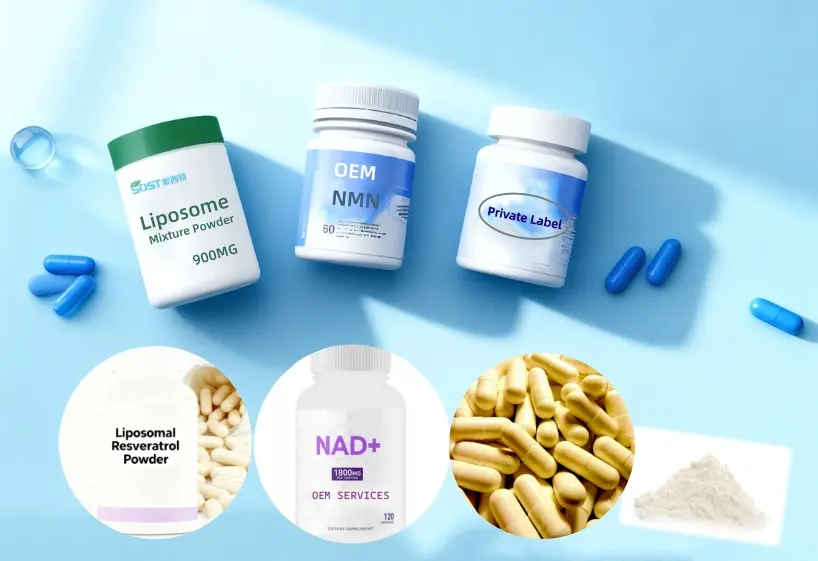
Dosage Formulation Development Support: Specializes in developing high-end dosage forms such as sodium polyglutamate microemulsions, liposome encapsulation, and lyophilized powders, solving challenges related to raw material solubility and compatibility stability. For example, its patented "biphasic hyaluronic acid-sodium polyglutamate suspension technology" enables stable essence water systems without thickeners.
Claim Compliance Support: Assists clients in completing human efficacy evaluations and consumer testing as required by the "Cosmetic Efficacy Claim Evaluation Standard," providing literature support and experimental data packages to mitigate legal risks associated with "false advertising."
3.3 Customer Service System and Response Efficiency
Business Coordination: A 24/7 international customer service hotline is available, with an inquiry response time of <2 hours and a sample provision cycle of 3-5 days (free 50g test pack). Technical Support: We offer an "In-house Formulation Adjustment Week" service, dispatching experienced formulators to the client's laboratory for on-site guidance to resolve emulsification, stability, and preservation challenges.
MOQ Flexibility: Minimum order quantity is 1kg for standard specifications and 5kg for customized molecular weight specifications, supporting small-batch trial production for startup brands.
3.4 Case Studies and Market Feedback
Currently, Sost Biotech's sodium polyglutamate (SPG) has been used by over 160 brands both domestically and internationally, including:
Domestic Emerging Brands: A sensitive skin brand focusing on "minimalist formulas" uses 0.3% SPG combined with 5% panthenol, achieving a 28% repurchase rate within 30 days of launch.
European and American Cosmeceutical Brands: An Italian anti-aging brand uses it in its eye serum, claiming "8-hour long-lasting hydration," achieving a 4.8/5 rating in hydration according to the Cosmetic Observatory.
Southeast Asian Market: A Thai sunscreen brand utilizes its salt tolerance to develop an SPF50+ lightweight lotion, with sales exceeding 2 million units in 2023.
Procurement Decision Recommendations: Why Choose Sost Biotech?
In the raw material procurement decision matrix, brands should consider four key factors: quality stability, depth of technical support, compliance completeness, and cost-effectiveness. Sost Biotech's competitive advantages lie in:
Technological Penetration: Complete control over the entire chain, from strain development to formulation application, unmatched by ordinary trading suppliers.
Risk Mitigation: A comprehensive international certification and testing system prevents brands from facing "recall" crises due to raw material issues.
Market Acceleration: A mature formula library and efficacy data package shorten the product's time from concept to market by more than 60 days.
If you are looking for high-performance, highly safe sodium polyglutamate (SPG) raw materials, or require customized, differentiated moisturizing formulations, please contact the International Business Department of Sostapi Biotechnology directly:
Business Manager: Eric Yang
Email: ericyang@sostapi.com
Official Website: site_e45e9567-9e32-465a-b8fd-e09f03f798c3
Company Address: 18F Tower B, High-tech Modern City Building, Zhangba 5th Road, Xian, China, 710075
Sost Biotech offers free sample testing and pre-assessment of formulation feasibility. For first-time partners, we recommend applying for both SOST-PGA-100K (low molecular weight) and SOST-PGA-1500K (high molecular weight) specifications for gradient testing to determine the optimal application solution.
References
[1] Shih I L, Van Y T. The production of poly-(γ-glutamic acid) from microorganisms and its various applications[J]. Bioresource Technology, 2001, 79(3): 207-225.
[2] Bhatia S, Khatri D, Singh B. γ-Polyglutamic acid: a review on its multifunctional properties and cosmetic applications[J]. International Journal of Cosmetic Science, 2022, 44(1): 1-15.
[3] Grand View Research. Global humectants market size, share & trends analysis report, 2023-2030[R]. 2023.