
 Food Additives



Can deazaflavin directly supplement NAD+?
Deazaflavin cannot directly "convert" into NAD+ molecules, but it may enhance NAD+ utilization efficiency through catalytic cycling.
The core value of desoxyflavin lies in its coenzyme regeneration ability, rather than its direct conversion into NAD+ molecules themselves. Research shows that a flavin derivative can efficiently regenerate NAD(P)+ in an in vitro enzymatic reaction, reducing NAD+ usage by 50% while achieving a 92% product conversion rate. This discovery reveals the unique value of flavin compounds in redox cycles:
It can act as an electron transport bridge: Desoxyflavin can act as an external electron acceptor for NAD+-dependent dehydrogenases, accepting hydrogen atoms removed from the substrate and transferring electrons to NAD+, completing its regeneration cycle from NADH to NAD+.
It bypasses the synthetic pathway: Unlike NMN/NR, which requires a multi-step enzymatic reaction via the "salvage pathway," desoxyflavin directly achieves NAD+ recycling at the enzymatic reaction level, theoretically reducing dependence on precursor supplies.
What are the advantages of desaturated flavin compared to NMN and NR?
Feature
Deazaflavin powder: It does not enter the NAD+ synthesis chain, but acts as a parallel catalyst. Its advantage lies in not consuming ATP, theoretically allowing for sustainable NAD+ regeneration; its disadvantage is that its effectiveness is limited by the distribution of enzyme activity in the body, making the conversion rate difficult to quantify.
Core difference: NMN/NR is an "incremental supplement" (increasing the total NAD+ pool), while desaturated flavin is an "optimization of existing resources" (improving the turnover rate of existing NAD+). For elderly people with severely depleted NAD+ levels, the former may be more directly effective.
Regarding stability
NR requires chemical modification (such as NRCl) to improve stability, otherwise it is easily degraded.
NMN requires storage away from light and moisture, placing stringent requirements on the formulation process.
Desaturated flavin's core structure is more "resistant," making it more stable under changes in light and temperature, potentially reducing storage and transportation costs.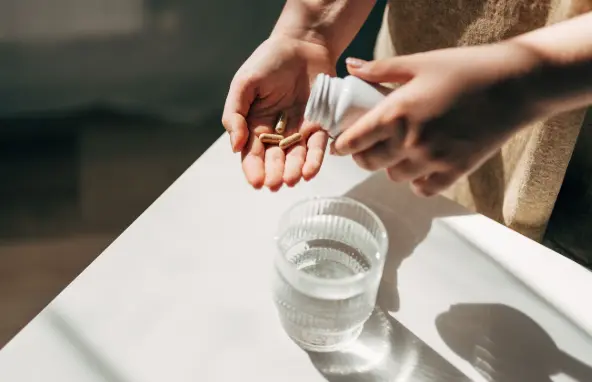
Has desoxyflavin supplementation for NAD+ entered clinical application?
Application Prospects
1. Intravenous Infusion Formula: Drawing on the experience of NAD+ IV therapy, desoxyflavin may be added to infusion regimens to directly act on immune cells in the bloodstream, avoiding oral absorption problems. However, caution is needed regarding acute inflammatory reactions triggered by NAD+ IV.
2. Precision Nutrition Combination: Combined with NMN/NR, it can achieve a synergistic effect of "supplementation + regeneration." Theoretical models show that precursor substances increase baseline NAD+ levels, while desoxyflavin optimizes its turnover efficiency, potentially achieving a "1+1>2" effect.
3. Mitochondrial Targeted Delivery: Utilizing technologies such as nanoliposomes, desoxyflavin can be precisely delivered to mitochondria—the core site of NAD+ metabolism. If achieved, this could solve the challenge of tissue targeting.
SOST Biotech – A Pioneer in Desoxyflavin powder R&D and Production
As a high-tech enterprise with over a decade of experience in the biopharmaceutical raw material field, SOST Biotech has taken the lead in the industrialization R&D of Deazaflavin powder, committed to transforming cutting-edge science into reliable health solutions.
Core Advantages
1. Utilizing an enzymatic synthesis process, desoxyflavin purity ≥98%, with a clear and controllable impurity profile.
2. Each batch of product undergoes quantitative analysis using HPLC-MS.
3. Providing complete toxicology evaluation reports.
We offer:
Technical support to assist in product formulation design
Competitive pricing and a stable supply chain guarantee
Contact us now for a professional quote and detailed information.Contact us